Closed System Vapes Supplier & Suppliers for Brazil

High-End Industrial Whitepaper: Navigating Brazil's Regulatory Framework, Tech Innovations, and Shenzhen Factory 4.0 Supply Chain Integration

Connect with Brazil Trade Desk

Executive Summary: The Brazil Closed System Vaporizer Landscape (ANVISA & Market Dynamics)

The Latin American electronic nicotine delivery systems (ENDS) market is undergoing a seismic paradigm shift, with Brazil emerging as a complex yet highly lucrative frontier. Officially regulated under ANVISA (Agência Nacional de Vigilância Sanitária) resolution RDC nº 46/2009, direct commercialization within municipal borders remains under strict surveillance. However, industrial, non-nicotine nebulizers, herbal delivery technologies, and medical-grade closed system devices have witnessed rapid integration into corporate wellness programs and clinical test projects across metropolitan zones like São Paulo and Rio de Janeiro.

As a global B2B procurement partner, navigating this regulatory topography requires deep domain expertise. This whitepaper analyzes the technology roadmap of closed-system pod systems, evaluates localized import routes under Mercosur tariff classifications, and highlights Shenzhen Turtle Vape Co., Ltd.'s Factory 4.0 automation systems, which guarantee flawless manufacturing tolerances demanded by institutional buyers.

RDC 46
ANVISA Safety Framework
100%
Leakage-Tested Cartridges
ISO 9
Cleanroom Manufacturing
21 CFR
FDA Equivalent Materials

Industrial & Tech Roadmap: Evolution of the Hermetic Pod System

Closed system vapes represent the pinnacle of user-safety and consistency because they prevent end-user tampering with liquid formulations. For the Brazilian import structure, where safety compliance determines customs entry success (Receita Federal), our R&D department at Shenzhen Turtle Vape Co., Ltd. has developed the following technical milestones:

Phase 1: Condensation Control Architecture
U-Shaped Airway Isolation & Absorption Matrix

Traditional vaporizers often fail in South America’s high-humidity zones, resulting in internal condensation. We implemented dual-condensate catch reservoirs and high-absorption non-woven organic rings to capture e-liquid droplets before they reach the battery terminals.

Phase 2: Ceramic Heating Elements vs. Cotton Coils
Ultra-Micro Porous Ceramic Honeycomb Technology

Our closed systems use high-grade alumina ceramic plates integrated with micron-level FeCrAl heating tracks. This structure ensures clean vaporization without local hotspots, minimizing formaldehyde generation below detectable limits.

Phase 3: Smart Power Management & Battery Safety
Micro-Controller Unit (MCU) Constant Output

Fluctuating voltages produce irregular aerosol matrices. By introducing specialized MCUs, our devices deliver consistent 3.6V outputs down to 5% battery capacity, preventing burnt dry-hits.

Shenzhen Factory 4.0: Supply Chain Resilience & Manufacturing Superiority

Located in Shenzhen, China—the epicenter of global vaporizer innovation and electronic infrastructure—Shenzhen Turtle Vape Co., Ltd. runs on a fully integrated Factory 4.0 ecosystem. Our automated production floors feature cleanrooms certified to ISO standards, ensuring all vape cartridges are free of environmental contaminants before entering the sealing chambers.

"Operating in Shenzhen gives us access to a dense concentration of electronic component suppliers. By controlling everything from component level production to packaging design, we provide unmatched lead times and technical reliability for bulk orders destined for Brazil."

Our quality verification stack is comprised of three core components:

  • Automatic Optical Inspection (AOI): Real-time vision-based sorting systems that detect physical micro-cracks in ceramic materials or improper alignments of sealing washers.
  • High-Vacuum Leakage Diagnostics: Simulation testing chambers that replicate pressures experienced at 30,000 feet, ensuring e-liquids remain secure inside their chambers during air freight transit.
  • Integrated Mass Spectrometry: Rigorous emissions analysis verifying that zero heavy metals are shed during vapor activation, providing an extra layer of safety.

Localization, Shipping Routes & Brazil Customs Optimization

Importing electronic hardware into South America requires a deep understanding of Mercosur logistics. Key considerations include:

  1. NCM Tariff Classification: Choosing correct Nomenclatura Comum do Mercosul codes to prevent administrative delays at customs checkpoints in Santos or Paranaguá.
  2. Portuguese Packaging Design: Standardizing instructions, warnings, and ingredient lists in Portuguese to comply with local consumer protection codes (Código de Defesa do Consumidor).
  3. Extreme Climate Mitigation: South America's sub-tropical temperatures demand e-liquid formulas with high viscosity baselines. This prevents oil separation during storage at maritime warehouses.

Frequently Asked Questions

Essential guidance on importing closed system vaporizers to Brazil

Are closed system vapes legal to import for business purposes in Brazil?
Under ANVISA's RDC 46/2009, selling recreational nicotine electronic cigarettes is restricted. However, imports of medical-grade nebulizers, clean heating devices, and non-nicotine aromatherapy pods are permitted under correct health and industrial classifications. We work closely with our partners to ensure the physical designs match compliant product scopes.
How does Shenzhen Turtle Vape Co., Ltd. ensure leak prevention during air cargo transit?
We employ a high-altitude vacuum validation test during our quality assurance stage. Every batch is subjected to negative pressure limits, simulating real flight altitude dynamics, to ensure the triple-seal PCTG material remains intact.
What are the customization (OEM/ODM) limits for Brazilian distributors?
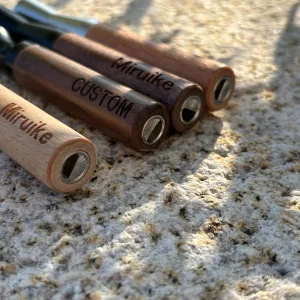
We offer full customization options, including Portuguese user manuals, custom casing materials (wood, chrome, anodized aluminum), battery optimization, and custom carton designs that meet child-resistant safety guidelines.
What is the average lead time for shipping to major Brazilian ports?
Production averages 15 to 25 days depending on the customization scope. Ocean freight to Brazil (Santos or Paranaguá) generally takes 35 to 45 days, while air express logistics require 7 to 12 working days, depending on customs processing speeds.

Ready to Establish a Compliant Import Supply Chain?

Contact Our Brazil Trade Representative