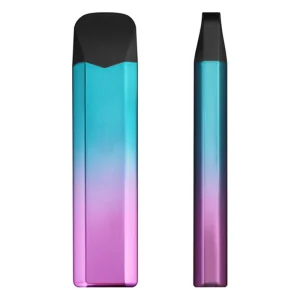
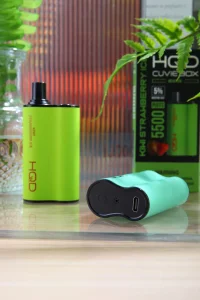
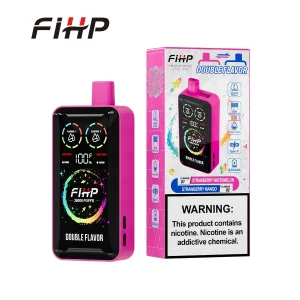
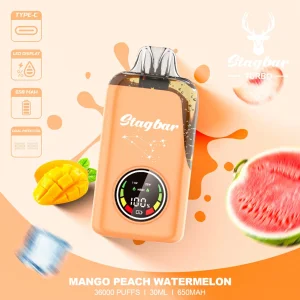
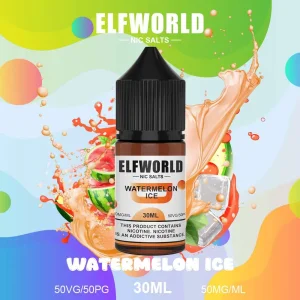
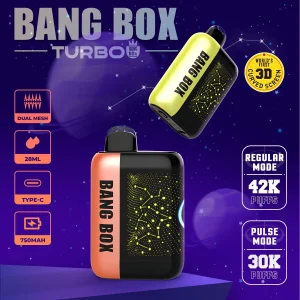
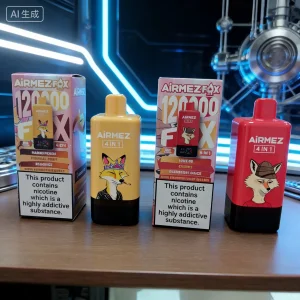
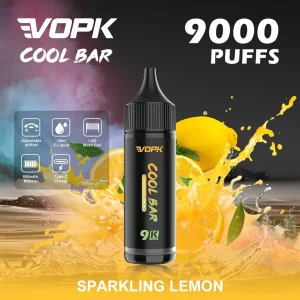
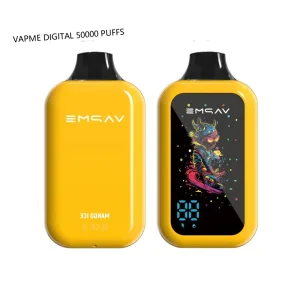
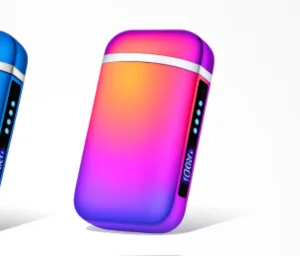
A B2B showcase of disposable vape devices, rechargeable platforms, smart-display hardware, and OEM/ODM smoking accessories. The portfolio below includes nicotine-free platforms alongside adjacent product listings; buyers should confirm nicotine content, labeling, and market compliance for each SKU.
Product availability, puff-count references, nicotine content, and compliance status must be verified per SKU and destination market. The listings above are preserved from the original catalog.
Nicotine-free vaping has moved from a peripheral SKU to a serious category for distributors, retailers, and private-label brands. The opportunity is global, but the procurement logic is increasingly evidence-based.
Demand is not driven by a single market. It is a combination of regulatory pressure, retailer risk management, consumer interest in zero-nicotine formats, and the search for differentiated product ranges that can be localized quickly. For B2B buyers, the central question has changed from “who can quote the highest puff count?” to “who can prove repeatable quality, documented compliance, and fast customization at a predictable total cost?”
The winning suppliers are those that can demonstrate repeatable quality, documented compliance, and rapid customization without turning every order into a new engineering project.
This white paper adds a procurement layer to factory selection: a scorecard, a compliance gateway, a technology roadmap, and an FAQ that maps buyer intent to evidence. The goal is not to replace legal advice or local due diligence. It is to help sourcing teams ask better questions, compare suppliers on the same evidence base, and avoid the hidden costs of undocumented product claims.
This is particularly important for nicotine-free vape products, where formulation control, labeling, and batch verification can determine whether a shipment is commercially usable. A nicotine-free device is not simply a device without nicotine; it is a product platform whose value depends on flavor consistency, leak performance, battery safety, and the credibility of the documentation that travels with each carton.
Illustrative framework for RFQ discussions; buyers should adjust weights by market, channel, and brand positioning.
Regional demand is not uniform. The same SKU can be attractive in one market and commercially risky in another because of labeling, import, retail, and consumer expectations.
Buyers in the EU and UK operate in an environment where packaging, labeling, notifications, and product documentation are closely scrutinized. Procurement teams typically prioritize TPD-style compliance readiness, child-resistant and tamper-evident packaging, consistent e-liquid volume, and clear zero-nicotine verification. Local language and warning requirements should be locked before artwork approval. A factory that can support version-controlled packaging and batch-level traceability is usually easier to qualify than one that offers only generic cartons.
In the United States, federal, state, and local rules can create a patchwork of requirements. Brands and distributors need a supply partner that can provide material declarations, batch records, and change-control logs, while also supporting age-gating and retail-ready packaging. Canada and other North American markets add their own labeling and import considerations. The practical procurement takeaway is to build a SKU-by-SKU compliance matrix before placing volume orders.
Latin American distribution networks are diverse and price-sensitive. Buyers often look for robust devices, broad flavor variety, Spanish and Portuguese packaging, and flexible MOQs that can support regional wholesalers. At the same time, customs documentation and local labeling can be inconsistent across markets. Successful programs usually pair a modular device platform with localized artwork and a clear plan for spare components, accessories, and after-sales support.
Premium retail environments in the Middle East and North Africa may favor high-capacity devices, smart displays, and differentiated finishes. However, import rules and advertising restrictions can vary significantly. Procurement teams should verify documentation, packaging language, and product claims before committing to a design. The strongest supplier relationships in this region tend to combine customization flexibility with disciplined shipment readiness.
Southeast Asia is fast-moving and highly competitive. Distributors often need cost-efficient hardware, rapid flavor refreshes, and responsive communication across time zones. Localization matters: language, packaging format, and retail presentation should align with channel expectations. Buyers should also confirm what evidence the factory can provide for battery safety, leak performance, and batch consistency, rather than relying on sample performance alone.
These channels often place a premium on presentation, tamper evidence, and compliance discipline. Travel retail buyers may require distinctive packaging, stable flavor profiles, and strong batch consistency across repeat orders. Sustainability expectations are also rising, including material reduction and recyclability discussions. A factory that can document its processes and adapt packaging without disrupting the core device platform is better positioned for these premium channels.
| Evaluation Area | Buyer Question | Evidence to Request |
|---|---|---|
| Compliance documentation | Can you demonstrate market-specific conformity for this SKU? | Labels, test reports, batch records, declarations, packaging artwork approvals. |
| Device consistency | How do you control leak, draw, and flavor delivery across lots? | Inline QC records, leak test data, sampling plan, change-control log. |
| Nicotine-free formulation | How is zero-nicotine status verified? | Formulation sheet, ingredient declarations, batch test reports, material statements. |
| Customization & packaging | Can you support private label and localized packaging? | Artwork workflow, proofing steps, packaging samples, language checks. |
| Logistics & after-sales | What happens when a batch or shipment needs correction? | Traceability process, replacement policy, export documents, escalation contacts. |
These questions are intended for B2B due diligence and are not legal advice.
A market-ready program connects product design, formulation, hardware, packaging, and documentation. These six solution layers are the practical building blocks of a scalable OEM/ODM supply relationship.
From an initial brief to a production-ready specification, OEM/ODM development connects industrial design, mechanical engineering, electronics, and packaging. The most efficient programs define performance targets early: draw resistance, leak threshold, battery endurance, puff-count reference, flavor delivery, and compliance documentation. Prototyping should be followed by validation, not immediate mass production.
Nicotine-free products depend on flavor stability, throat-feel balance, and consistent aerosol delivery. Buyers should request formulation sheets, ingredient declarations, and batch verification. Flavor systems should be tested across temperature, storage, and device-age scenarios. For brands making a nicotine-free claim, documentation is as important as sensory performance.
Atomization, airflow, and battery performance are a single system. A small change in coil resistance, wick material, or air path can alter flavor and leak behavior. Procurement teams should ask how the factory controls critical tolerances, validates USB-C charging, and tests overcharge, over-discharge, and short-circuit protection. Reliable hardware reduces returns and protects brand equity.
Smart displays can improve user feedback, but they also increase engineering and quality complexity. Brands should define what the display must show, how accuracy is validated, and how firmware changes are controlled. Authentication features—such as QR codes, tamper labels, or digital verification—can support anti-counterfeiting and traceability, provided they are integrated into packaging and batch records.
Packaging carries regulatory warnings, language, batch data, and brand identity. A localized program should include artwork proofing, version control, material selection, and child-resistant or tamper-evident features where required. Factories that manage packaging as an engineering deliverable—not a last-minute print job—reduce launch risk and reprint costs.
Documentation should travel with the product. Depending on the market, this may include declarations, test reports, batch records, labeling approvals, and packing lists. Shipment readiness also means export cartons, pallet configurations, and traceability. A factory that can produce organized documentation at the batch level is easier to audit and easier to scale.
The strongest nicotine-free vape programs treat the product as a regulated consumer system: formulation, hardware, packaging, and documentation are designed together. This is where information gain becomes commercial advantage—less rework, fewer surprises, and faster market entry.
Competition is shifting from raw capacity to trust engineering: atomization consistency, battery intelligence, authentication, sustainability, and modular platforms.
Future devices will compete on consistency, not just capacity. Expect tighter control of coil geometry, wick saturation, air pressure, and sealing interfaces. Advanced leak testing and accelerated aging can reduce returns. For nicotine-free formulations, stable atomization is essential because flavor balance can change quickly if delivery is inconsistent.
USB-C rechargeability is now a baseline expectation in many markets. The next layer is battery intelligence: charge profiling, temperature monitoring, protection circuits, and clear user instructions. Factories should be able to document cell sourcing, protection design, and testing protocols. Safety claims must be supported by evidence, not marketing language.
Displays can show battery status, e-liquid level, puff count, or flavor mode. The commercial value depends on accuracy and durability. Buyers should ask how sensors are calibrated, how display failure is handled, and whether the added electronics affect battery life or compliance. The best implementations simplify the user experience rather than adding novelty.
Counterfeiting and gray-market diversion are persistent risks. QR codes, tamper-evident labels, and batch-level traceability can help authorized distributors verify products. The system should connect packaging, production records, and shipment data. Authentication works best when it is designed into the SKU and supported by a clear policy for scanning and verification.
Regulatory and retail pressure is increasing around single-use materials. Near-term improvements include material reduction, separable components, paper-based packaging, and clearer disposal instructions. Longer-term progress will depend on collection infrastructure and design-for-recycling. Buyers should ask for material declarations and avoid unsubstantiated environmental claims.
Modular platforms allow brands to adapt devices across markets without redesigning the entire system. A common chassis, battery platform, or airflow architecture can support different e-liquid volumes, flavor systems, and display options. Modularity can improve speed to market, but it requires disciplined change control so that one market’s customization does not compromise another market’s compliance.
Focus on documentation discipline, leak performance, USB-C safety, and localized packaging. Buyers should prioritize suppliers that can prove batch consistency.
Expect more smart displays, authentication features, and modular platforms. Compliance data will become part of the product specification, not a separate file.
Sustainability, traceability, and design-for-recycling may reshape procurement criteria. The factories that win will be those that can innovate without weakening quality systems.
The global vaping industry is maturing around documented supply chains, tighter retail scrutiny, and faster product cycles. China’s manufacturing ecosystem remains central, but supplier selection must be more disciplined than ever.
Shenzhen remains one of the world’s most concentrated electronics and vaping supply ecosystems. Access to components, tooling, packaging, and testing services can shorten development cycles, but it also means buyers must qualify suppliers carefully. Proximity to suppliers is not a substitute for process control.
Capacity should be evaluated together with quality systems. A factory may be able to produce large volumes, but buyers need to understand incoming material control, inline inspection, finished-product sampling, and change management. Ask how nonconforming batches are handled and how corrective actions are documented.
OEM, ODM, and private-label programs solve different problems. OEM is typically specification-led; ODM leverages existing platforms; private label focuses on branding and packaging. The right model depends on speed, differentiation, compliance, and internal engineering resources. A clear statement of work prevents scope creep.
MOQ and lead time are commercial terms, but they are also risk controls. Buyers should request written assumptions for tooling, sampling, mass production, and inspection. Change control is especially important for nicotine-free SKUs, where a material or formulation change may affect labeling, claims, or market notifications.
Shipping configuration affects cost and condition. Buyers should discuss carton strength, palletization, battery transport documentation, and any regional warehouse options referenced in product listings. For repeat programs, a rolling forecast and staged inventory plan can reduce stockouts without overloading cash flow.
Trade compliance is a shared responsibility. The buyer owns market access and local legal advice; the factory supports product documentation, labeling inputs, and shipment records. A documented handoff between factory, freight forwarder, importer, and distributor reduces delays and improves accountability.
Localization is not only translation. It is the controlled adaptation of product, packaging, documentation, and fulfillment to a specific market’s expectations and legal framework.
Start with a market-by-market matrix: product classification, import requirements, labeling, notifications, testing, and advertising restrictions. The factory can provide technical inputs, but the brand or importer should confirm legal obligations. A single SKU may require different documentation for different destinations.
Labels should be treated as controlled documents. Version numbers, approval records, and artwork proofs help prevent obsolete packaging from entering production. Language, warnings, batch codes, and age-gating cues should be verified before print. For nicotine-free claims, the label must match the formulation and supporting records.
Batch traceability connects raw materials, production runs, packaging, and shipment. It supports quality investigations and market audits. Buyers should request a traceability example and confirm how long records are retained. For high-risk markets, third-party testing may be appropriate.
Even nicotine-free products may be subject to age restrictions or retail controls depending on the market. Packaging, instructions, and online content should support responsible use and comply with local advertising rules. Safety features such as child-resistant packaging and clear warnings should be specified in the product brief.
Several product listings in this portfolio reference EU warehouse availability. For buyers, warehousing can improve replenishment speed, but it does not remove compliance obligations. Confirm inventory ownership, batch traceability, labeling status, and who is responsible for import clearance before relying on a warehouse program.
After-sales support should include escalation contacts, corrective-action procedures, and a plan for field issues. Change control should cover materials, firmware, packaging, and formulation. Recall readiness is not a sign of failure; it is evidence of a mature quality system. Document the process before launch.
Regulatory note: This white paper is for B2B education and does not constitute legal advice. Vaping requirements vary by country, state, and locality. Buyers should verify all claims, labels, and import requirements with qualified local counsel and relevant authorities.
Google’s E-E-A-T principle is a useful procurement lens: experience, expertise, authoritativeness, and trustworthiness should be visible in the evidence a supplier provides.
Relevant experience is demonstrated through product categories, manufacturing environment, and repeatable processes. Buyers should ask for examples of projects similar to their own—disposable vapes, rechargeable devices, pod systems, or customized electronic cigarette solutions—and request evidence of how quality issues were resolved.
Expertise appears in specification discipline. A capable partner can discuss atomization, battery safety, materials, packaging, and compliance documentation in concrete terms. Vague answers about “high quality” are less useful than defined test methods, tolerances, and change-control procedures.
Authority is not self-declared. It is built through consistent documentation, clear scope, and the ability to support global brands, distributors, and wholesalers. Buyers should review company information, product range, and quality statements, then verify the details that matter for their market.
Trust grows when claims are bounded and evidence is available. Factories should avoid promising outcomes they cannot control, such as market approval. They should state what they can document, what they test, and where the buyer remains responsible. Transparent limitations are a positive signal, not a weakness.
A Shenzhen-based OEM/ODM partner for disposable vapes, rechargeable devices, pod systems, and customized electronic cigarette solutions.
Shenzhen Turtle Vape Co., Ltd. is a professional China disposable vape manufacturer dedicated to the research, development, production, and global distribution of high-quality electronic cigarette products. As an experienced OEM & ODM vape device supplier, the company is committed to providing innovative, reliable, and market-oriented vaping solutions for customers worldwide.
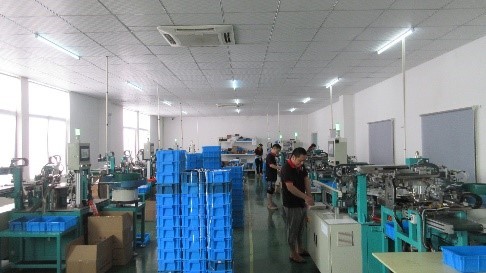
Located in Shenzhen, China's leading hub for electronic innovation, Shenzhen Turtle Vape Co., Ltd. operates advanced manufacturing facilities equipped with modern production lines and stringent quality control systems. The company specializes in a wide range of products, including disposable vapes, rechargeable disposable devices, pod systems, and customized electronic cigarette solutions designed to meet diverse market demands.
Innovation is a key driving force behind the company's growth. Supported by a skilled R&D team, Shenzhen Turtle Vape Co., Ltd. continuously develops new technologies, improves product performance, and introduces fashionable designs that enhance the overall vaping experience. The company also offers comprehensive OEM and ODM services, enabling clients to customize product appearance, specifications, packaging, and branding according to their unique business requirements.
Quality and safety remain top priorities throughout the manufacturing process. From raw material selection to final product inspection, every stage is carefully monitored to ensure compliance with international quality standards and industry regulations. This commitment enables the company to deliver consistent, safe, and dependable products to customers across global markets.
Driven by innovation, quality, and customer satisfaction, Shenzhen Turtle Vape Co., Ltd. strives to become a trusted long-term partner for global vape brands, distributors, and wholesalers seeking premium disposable vape manufacturing solutions.


These answers address common buyer-intent questions for distributors, brands, and wholesalers evaluating China-based nicotine-free vape products and OEM/ODM support.
A nicotine-free vape is a device and/or formulation that contains no nicotine in the e-liquid or aerosol delivery system. For procurement, the term must be verified at SKU level through formulation sheets, batch records, and labeling. Buyers should not assume that a zero-nicotine claim on packaging is sufficient; they should request documentary evidence and confirm requirements with local counsel.
Based on its company profile, Shenzhen Turtle Vape Co., Ltd. provides OEM and ODM services for disposable vapes, rechargeable disposable devices, pod systems, and customized electronic cigarette solutions. Buyers can discuss appearance, specifications, packaging, and branding. The final scope should be defined in a written specification, including nicotine status, materials, performance targets, and compliance documentation.
Requirements vary. EU/UK-style regimes may require notifications, labeling, and packaging controls. North America may involve federal and state requirements. Other markets have their own import, advertising, and product-safety rules. The practical answer is to build a market-by-market compliance matrix before ordering.
Puff count is a marketing and performance reference, not a standardized measure. Buyers should compare test methods, coil resistance, airflow, e-liquid volume, battery capacity, and use conditions. For nicotine-free products, flavor stability and leak performance are often more important than maximum puff claims.
A practical workflow is: brief and market review; specification and compliance check; design and artwork; sample build; performance and packaging validation; pilot batch; mass production; final inspection; export documentation. Timelines depend on customization, testing, and component availability. Buyers should request a written project schedule and change-control process.
Use a documented supplier qualification process, request batch traceability, verify labels per destination, and stage inventory against confirmed demand. Where available, regional warehouse options and modular SKU platforms can improve responsiveness. Avoid unverified claims and keep marketing materials aligned with local rules.
Packaging is a compliance and brand asset. It carries warnings, language, age-gating cues, batch information, and market-specific instructions. Localized packaging should be proofed by both the buyer and the factory, with artwork approvals and version control. Child-resistant and tamper-evident features may be required in some markets.
Some factories can support both, but the buyer must confirm segregation, formulation control, labeling, and documentation. For brands with a nicotine-free positioning, it is important to verify that the specific SKU and supply chain meet the intended claim. A written specification and batch-level verification are essential.
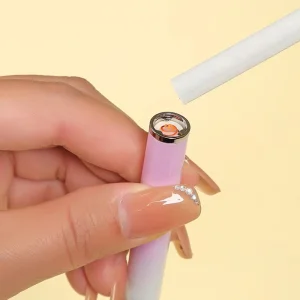
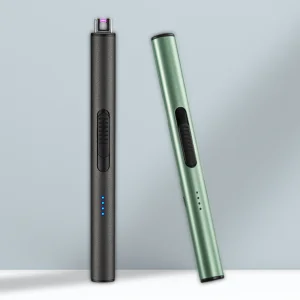
Additional factory listings for rechargeable lighters, display accessories, high-capacity disposable devices, zero-nicotine platforms, and custom electronic products. Product availability and compliance status should be confirmed for each destination market.
 Turtle Vape