Top 10 Tips on How to Choose the Right Disposable Vape?

Time:2026-10-11 Author:Charlotte
0%

Choosing a disposable vape should begin with safety, legality, and personal smoking history, not bright packaging or oversized puff claims. This guide explains how to choose the right disposable vape for adults who already use nicotine and live where these products are legally permitted.

Recent evidence gives useful context. The Cochrane Living Review, updated in 2024, found that nicotine e-cigarettes can help some adults stop smoking. However, it also stresses that evidence remains limited for long-term effects. The UK Office for Health Improvement and Disparities similarly reports substantially lower health risks than smoking, while confirming that vaping is not risk-free. Product quality still varies widely.

Professor Linda Bauld has said, “Vaping is not risk-free, but it is significantly less harmful than smoking.” That distinction matters. A responsible choice means checking nicotine strength, ingredients, tamper-proof packaging, battery condition, and a clear manufacturer address. Look for sealed devices without leaks, burnt smells, loose mouthpieces, or damaged batteries. Buy only from reputable, legally compliant retailers.

The CDC’s National Youth Tobacco Survey continues to show concern about youth disposable-vape use. Therefore, age verification and child-resistant packaging are essential. These products are not for non-smokers, pregnant people, or young users.

No checklist is perfect. Personal tolerance, flavor fatigue, and unexpected throat irritation can change the decision after purchase. The following tips make those details easier to assess. They focus on practical evidence, transparent labeling, and realistic expectations rather than exaggerated marketing claims.
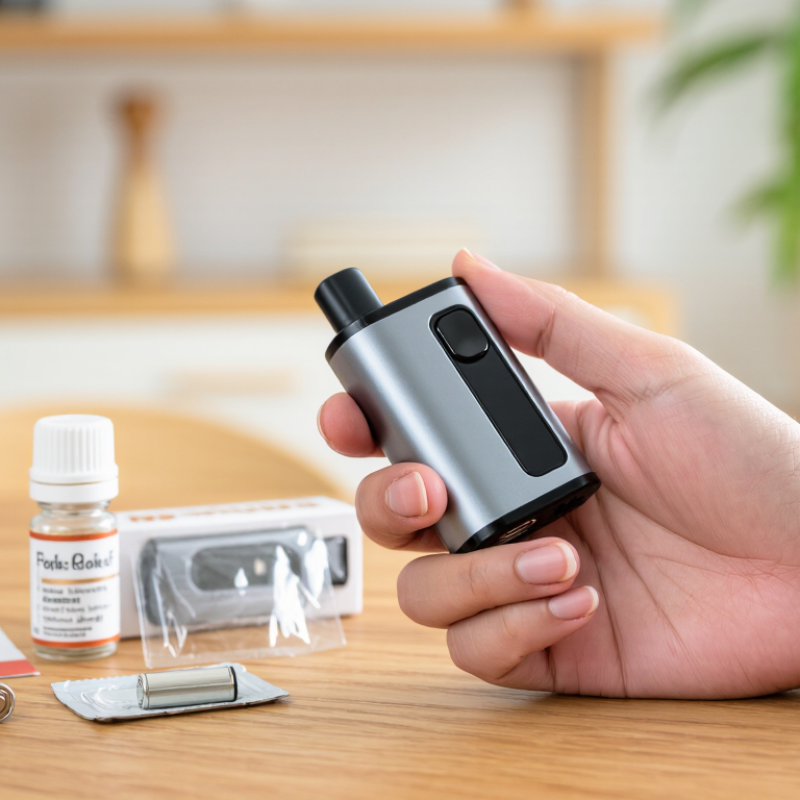
Top 10 Tips on How to Choose the Right Disposable Vape?

Understand Your Nicotine Needs and Vaping Preferences

Top 10 Tips on How to Choose the Right Disposable Vape?

For adults who already use nicotine, begin by identifying why you vape. Do you need occasional support, or do cravings appear throughout the day? Your answer can guide nicotine strength and device size. A stronger option may feel harsh, while a weaker one may encourage repeated use. Check the nicotine amount clearly printed on the package. Do not judge strength by puff counts alone. Labels and measuring methods can vary.

Your preferences matter, but comfort should not hide safety. Consider the draw style, throat sensation, flavor, and device weight. A tight draw may resemble a cigarette, while a loose draw can feel airier. Choose simple flavors you can tolerate over time. Sweet, intense flavors may become tiring quickly. They are not always better. If dizziness, nausea, headache, or a racing heartbeat appears, stop using it and seek medical advice. Nicotine can cause dependence, even when vaping feels mild.

Buy only from a legal, traceable seller, and inspect the packaging before opening it. Avoid damaged, leaking, unusually hot, or tampered devices. Never share a vape, modify it, or leave it near children or pets. Follow local disposal rules for products containing batteries. A practical test is to record when cravings occur for several days. This can reveal whether your chosen strength matches your actual needs. My judgment might still be wrong; nicotine tolerance changes, and professional guidance is sensible when dependence feels difficult to control.

Check Product Authenticity, Safety Standards, and Ingredient Labels

Choosing the right disposable vape starts with evidence, not attractive packaging. Check the seal, batch number, QR code, and manufacturer contact details. Scan the code through an official verification page, not an unfamiliar link. Compare the printed information with the product’s online record. Missing details are a warning.

Safety claims also need careful reading. Look for compliance information required in your market, such as electrical, packaging, and nicotine rules. Certification marks alone do not prove complete safety.

The National Academies’ 2018 report found that e-cigarette aerosols generally contain fewer toxicants than cigarette smoke, but they are not harmless. That distinction matters.

Avoid damaged devices, leaking containers, or unusually cheap products. Cheap can become costly.

Read the ingredient label closely. It should identify nicotine strength, propylene glycol, vegetable glycerin, flavoring substances, allergens, lot information, and expiry details where required. The World Health Organization warns that emissions may contain nicotine and other potentially harmful substances. Do not trust vague phrases like “natural” or “clean.” They explain very little.

A practical check is simple: photograph the label before purchase and compare it with the manufacturer’s published specifications. I still find labels difficult to interpret sometimes. That is a weakness in the industry, not a reason to guess. If information is incomplete, choose a product with clearer documentation.

Compare Battery Life, E-Liquid Capacity, and Puff Estimates

Choosing the right disposable vape starts with matching capacity to your routine, not chasing the biggest number. In practical comparisons, check battery rating, e-liquid volume, and estimated puffs together. A large e-liquid capacity is less useful if the battery ends early. The reverse also happens. Battery first.

Battery capacity is commonly listed in mAh, but output power changes runtime. Higher power can drain a battery faster, even with identical ratings. Check whether the battery realistically supports the advertised e-liquid volume. If the device feels weak near its final third, performance may become less consistent. I also look for clear charging information and intact packaging, where permitted by local rules. Do not rely on appearance alone.

Puff estimates are rough guides, not promises. They depend on inhale length, frequency, airflow, and temperature. A quoted 600 puffs may produce fewer during long, deep draws. E-liquid capacity offers a better comparison, but it cannot predict personal use precisely. I once treated puff counts as exact and overestimated a device’s lifespan. That was a poor assumption. Compare the figures with your usual draw length and daily frequency. Purchase and use only where lawful and appropriate for adults.

Top 10 Tips on How to Choose the Right Disposable Vape? - Compare Battery Life, E-Liquid Capacity, and Puff Estimates

Tip Comparison Dimension Useful Data or Benchmark How to Evaluate It Important Note
1 Battery capacity Common disposable-vape batteries are approximately 400–650 mAh, while larger rechargeable designs may use higher capacities. Choose a capacity that matches your expected daily use rather than selecting the largest number automatically. Actual battery performance depends on coil resistance, airflow, puff duration, and temperature.
2 E-liquid capacity Available capacities commonly range from about 2 mL to 20 mL, depending on local regulations and product design. Compare liquid volume in millilitres, not only the advertised puff count. Legal maximums and packaging requirements differ by country or region.
3 Puff estimate A practical estimate is roughly 100–150 puffs per millilitre, but results vary significantly. Use the advertised puff number as a comparative estimate, not a guaranteed quantity. Longer or deeper draws consume more e-liquid and reduce the total number of puffs.
4 Battery-to-liquid balance For a device marketed for extended use, the battery should be sufficient to vaporize most or all of the supplied liquid. Avoid products where the battery may die while a substantial amount of liquid remains. Battery capacity alone does not predict the exact service life of a device.
5 Rechargeability Rechargeable models typically include a USB-C port and can extend use when the battery is depleted before the liquid. Select a rechargeable design when portability and avoiding premature battery depletion are priorities. Rechargeable does not mean refillable; check both features separately.
6 Nicotine strength Strengths may be listed as mg/mL or as a percentage; 20 mg/mL equals 2%. Compare products using the same unit and choose only a legally permitted strength. Nicotine is addictive. Non-smokers, minors, and pregnant people should not use nicotine products.
7 Draw activation and airflow Draw-activated devices are simple to use; adjustable airflow can change vapour volume and draw tightness. Choose a tighter draw for a cigarette-like experience or adjustable airflow for more flexibility. Airflow settings can affect e-liquid consumption and puff estimates.
8 Leakage and construction quality A well-sealed device should show no liquid around the mouthpiece, airflow holes, or charging port. Inspect packaging, seals, mouthpiece fit, and the device body before use. Do not use a device that is leaking, damaged, swollen, unusually hot, or producing a burnt taste.
9 Shelf life and storage Heat, direct sunlight, and long storage can affect battery performance and e-liquid quality. Check the manufacturing or expiry information where available and store the device in a cool, dry place. Keep devices away from children, pets, water, and extreme temperatures.
10 Compliance and disposal Packaging should provide nicotine information, ingredients, warnings, batch details, and required regulatory markings. Buy only from lawful sellers and follow local rules for use, transport, and disposal. Disposable vapes contain lithium batteries and should be taken to an appropriate battery or e-waste collection point.

Comparison formula: Estimated puffs ≈ e-liquid capacity (mL) × 100–150 puffs/mL. This is an approximate comparison only; puff duration, airflow, coil design, battery output, and user behaviour can produce different results.

Evaluate Flavor Options, Device Design, and Ease of Use

Flavor is often the first detail people notice, but taste changes during daily use. A bright fruit flavor may feel pleasant at first and tiring later. Read the ingredient information carefully, and avoid products with unclear descriptions. If possible, choose a smaller quantity before committing to one flavor. I once preferred a strong cooling note, then found it distracting after several days.

Tip: Compare flavor descriptions with your usual preferences. Check whether the profile is sweet, sour, creamy, or minty. Do not assume attractive packaging means better taste.

Device design affects comfort, storage, and control. Look for a secure mouthpiece, a smooth surface, and a shape that feels stable in your hand. A visible indicator can help you notice battery or liquid status, although indicators are not always precise. Avoid damaged packaging, loose parts, leaks, or unusual odors. These details deserve attention.

Tip: Test the weight and airflow if a legal retailer permits it. A device that feels too tight or bulky may become inconvenient quickly.

Ease of use should remain simple without encouraging careless habits. Draw-activated designs remove buttons, while button controls may reduce accidental activation. Check the instructions, disposal guidance, and age requirements in your area. Choose products from transparent sellers that provide clear safety information. My judgment can still be wrong, so I would reconsider any device that feels confusing or poorly documented.

Review Cost, Availability, Disposal Methods, and User Feedback

Top 10 Tips on How to Choose the Right Disposable Vape?

For legal-age adults, cost should mean more than the shelf price. Calculate the estimated daily cost, delivery fees, taxes, and replacement frequency. A cheap device becomes expensive if it leaks or stops charging quickly.

The 2024 National Youth Tobacco Survey reported 1.63 million U.S. middle and high school students currently used e-cigarettes.

Therefore, responsible sellers should verify age and follow local rules. Never buy from unclear sources.

Availability also deserves careful checking. Choose a seller with transparent stock information, clear return policies, and lawful distribution. A popular product may still be unsuitable if replacement units are difficult to find.

Read user feedback across several independent platforms. Look for repeated comments about leaking, inconsistent flavor, battery failure, and customer support. Five-star ratings alone prove little. Patterns matter more.

Disposal is easy to overlook. The U.S. Environmental Protection Agency’s 2021 report identifies discarded vaping products as an emerging waste stream containing batteries, nicotine residues, and other chemicals.

Do not place used devices in household trash or standard recycling unless local guidance permits it. Use an approved battery or e-waste collection point. Check the rules.

My judgment may change when better data appears, and user reviews can be incomplete, biased, or outdated.

FAQS

How should adults choose nicotine strength?

Start by considering how often cravings appear during the day. Occasional cravings may not require the strongest option. A stronger product can feel harsh, while a weaker one may encourage repeated use. Check the nicotine amount on the package. Puff counts do not prove strength.

How can I match device capacity to my routine?

Compare battery capacity, e-liquid volume, and estimated puffs together. A large liquid volume is not useful if the battery ends early. Higher power may drain the battery faster. Battery first.

Are puff estimates reliable?

Puff estimates are rough guides, not promises. Long, deep draws usually produce fewer puffs. Frequency, airflow, and temperature also change the result. I once trusted the number too much. That was a poor assumption.

What device features affect comfort?

Consider draw tightness, airflow, weight, and mouthpiece design. A tight draw may resemble a cigarette. A loose draw can feel more airy. A stable shape helps during daily handling. Too bulky?

How should I evaluate flavors?

Look for clear descriptions, such as fruit, mint, creamy, sweet, or sour. Strong flavors may become tiring after several days. Consider buying a smaller quantity first, where lawful and available. Attractive packaging does not guarantee good taste.

What safety signs should make me reject a device?

Avoid products with leaks, damaged packaging, loose parts, unusual odors, or excessive heat. Do not use a device that appears tampered with. Clear instructions and traceable sellers matter. Appearance alone is not enough.

What symptoms mean I should stop using nicotine?

Stop if dizziness, nausea, headache, or a racing heartbeat appears. Seek medical advice when symptoms occur. Nicotine can cause dependence, even when the experience feels mild. Tolerance can change. I may misjudge it.

How should disposable devices be stored and discarded?

Keep them away from children and pets. Do not share or modify a device. Follow local rules for battery-containing waste. Check local requirements before disposal. Small details matter.

Conclusion

Choosing the right disposable vape starts with understanding your nicotine needs, preferred draw, and flavor profile. Consider whether you want a mild or stronger experience, then check the product’s authenticity, safety information, ingredient labels, and age-related legal requirements. Reliable packaging should provide clear details rather than vague or missing claims. It is also useful to compare battery life, e-liquid capacity, and puff estimates, remembering that actual performance can vary based on how often and deeply you use the device.

When learning how to choose the right disposable vape, look for a comfortable design, simple operation, and flavors that match your preferences. Before purchasing, compare the total cost, availability from lawful sellers, disposal instructions, and feedback from verified users. Select products that are sealed, clearly labeled, and responsibly made, and avoid damaged or suspicious devices. Always follow local regulations and manufacturer guidance, keep the product away from children and pets, and dispose of it through appropriate battery or electronic-waste channels.

Charlotte

Charlotte

Charlotte is a seasoned marketing professional with a deep understanding of the company's portfolio and a passion for elevating its presence in the market. With a keen eye for detail and a commitment to excellence, she ensures that our professional blog is regularly updated with insightful articles......